In 2023, the AI skill everyone wanted was writing the perfect prompt.
In 2026, it’s deciding what AI should know before you ask.
As models and agents improve, the returns from perfecting a prompt are shrinking.
Models are getting better at working out how to approach a task on their own, and too many instructions can now get in their way.
But one thing hasn’t changed: models can’t work out what they don’t know (obviously).
Take a simple example. You’re a project manager preparing a presentation for senior management.
Both requests start the same way:
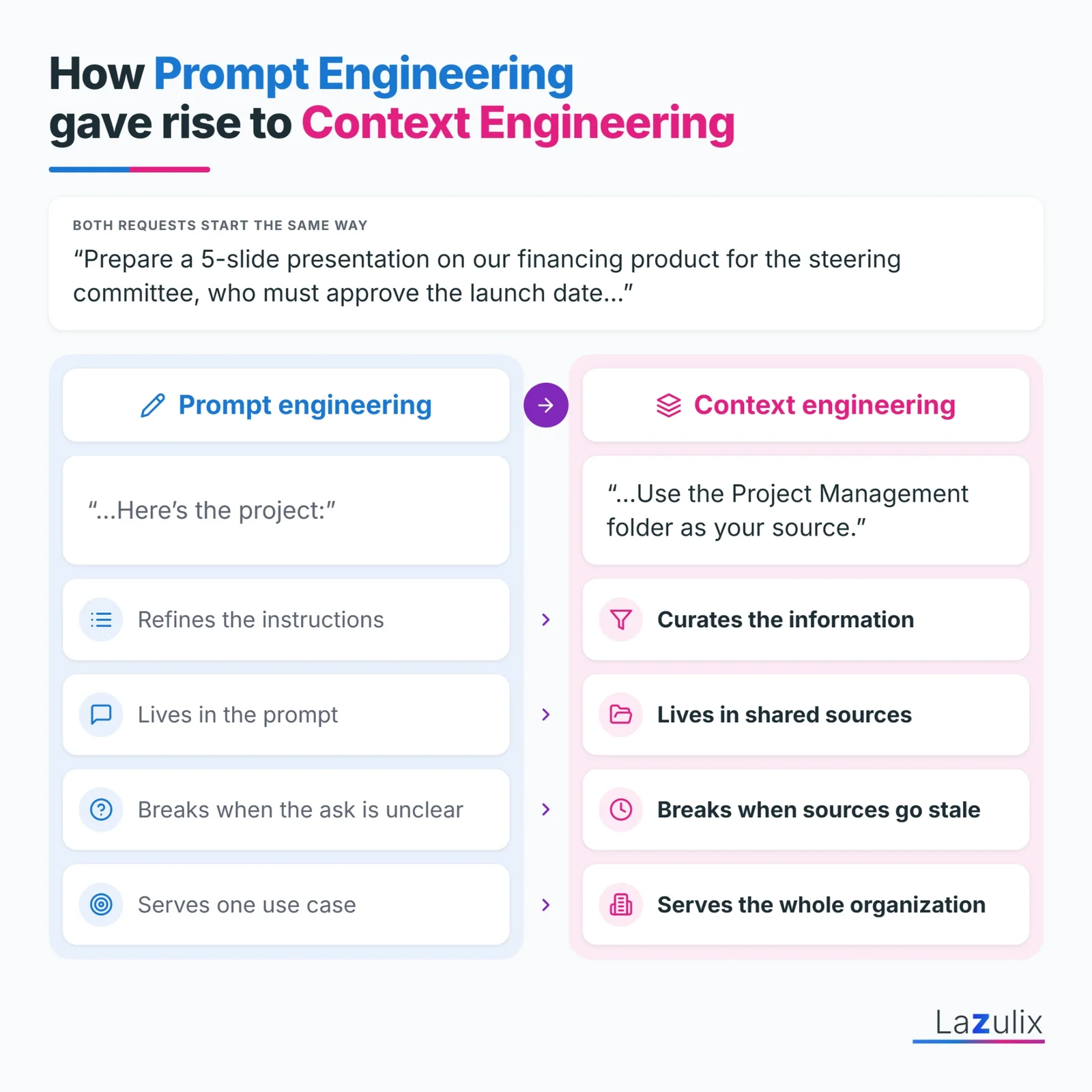
“Prepare a 5-slide presentation on our financing product for the steering committee, who must approve the launch date…”
↳ Prompt engineering continues: “…Here’s the project:” followed by a summary of the objectives, scope, decisions, risks and timeline, written out or pasted in.
↳ Context engineering continues: “…Use the Project Management folder in our knowledge base as your source.”
In the second case, the AI isn’t limited to what fits in one request. It can look across everything the team has documented, pick what’s most relevant to this audience and this decision, and shape the presentation around it.
That’s also the direction Anthropic describes in its guidance on context engineering
↳ Point the AI to where the information lives, and let it pull what it needs when it needs it.
But it isn’t magic.
It only works if that folder is reliable: requirements up to date, decisions recorded, outdated drafts gone. Point it at a folder of stale documents and you’ll get a polished, confident, wrong presentation.
Good context is an organizational asset:
➡️ Context is reusable. Document the project once, and every task can draw on what’s relevant.
➡️ Context is collaborative. A prompt is usually put together by one person, for one request. Context can carry what a whole team knows.
➡️ Context needs an owner. Someone has to choose what goes in, check it and keep it current. “Not more context. The right context.”
Like any asset, it only pays off if someone looks after it and uses it well.
Of course, prompting isn’t disappearing. Clear instructions still matter.
But the effort is moving from writing better requests to maintaining what AI works from.